
TRACK | No Lonesome – Good Hurt

5/5 golden merles

No Lonesome’s “Good Hurt” offers a nice, vibrant stain derived from the guttural undercurrent-slurry of Americana, freak-folk and anti-folk. There’s a rich hybridization fermented in its depths, at least a bit of alt country, psych and pop rock in there as well. The tune provides so much joy and triumphant careening for something seemingly repelled and defined by its antitheses.

But as well it should be. “The ultimate hidden truth of the world,” as Graeber wrote, “is that it is something that we make, and could just as easily make differently.”

It is again the care in the compiling that appeals to me most. There’s a lot to admire in the accumulated decision making, investing the piece with details, small phases arranged and melding the rougher edges: the spoken background chatter around the one and two minute marks, the gently mangled vocoder chorus of backing vocals rising in support, its plumed horns and alternating drum lanes that reinforce from differing angular plots upon the soundscape. It all invests the structure with greater meaning and acts in the service of the feeling which is evoked.

“This time / it’s a good hurt… / I’ll love you all I can.”

Friends of Goon / Women / Nerve City / Casual Technicians will likely find some camaraderie in its viscid texture, winding melodic sensibilities, and earnest, heartache-hemorrhaged proclamations.

The four track digital album “Am I What I’m Not?” is available now for $5 on the bandcamp.

TRACK | Goon – Death Spells

5/5 golden merles

With “Death Spells,” Kenny Becker and Goon have again (and again) produced some of the most engaging melodic psych folk around. In the elaborately warped structure you are agreeably consumed, intricacies compiling and enveloping, comfortably saturating the self without obliterating it. Some trick.

“Death spells are coming down / don’t go outside.” That’s how it begins. It really seems to me like some small banner held aloft in attempt to redeem the medium from utter ruin. Its composition and manner of maneuvering stands out like a healthy thumb amidst the swollen hand and arm and body and world at large.

Why don’t more people do this, don’t even seem to desire it? Probably because it is difficult. For most songwriters, after a couple of bars the intention is lost or staggers. After a couple iterations the melody conforms to a bare, essential framework, the tendrils and impulses are shorn and hewn for functionality, reproducibility. While writing a song you have to remember it.

There’s a fair amount of bravery to desire this type of expansion. And it’s something the maker must consider during the making, from the outset, as desirable. The risk of either excess, mathematical purity or utterly indistinct irrelevance, begs for a balance. And the only scale is an intuitive understanding of form and the history of shared forms/symbols with the audience. Awareness and ability do not often go hand in hand.

It breaks my brain that the first reviews of Goon on this blog are now 3 years old for how fresh the tracks still sound, timeless I guess. The track is $2 on the bandcamp.

If you like it, see somewhat similar operators: memory card, Melaina Kol, Windowsill. This is the direction (anti)folk should move into and a good illustration of how to incorporate uncertainty into the model without losing the essence, a bridge that has been burned but remains traversable.

Short recommendation:
For a similar level of attention to detail and world building, see Georges Schwizgebel, “78 Tours.

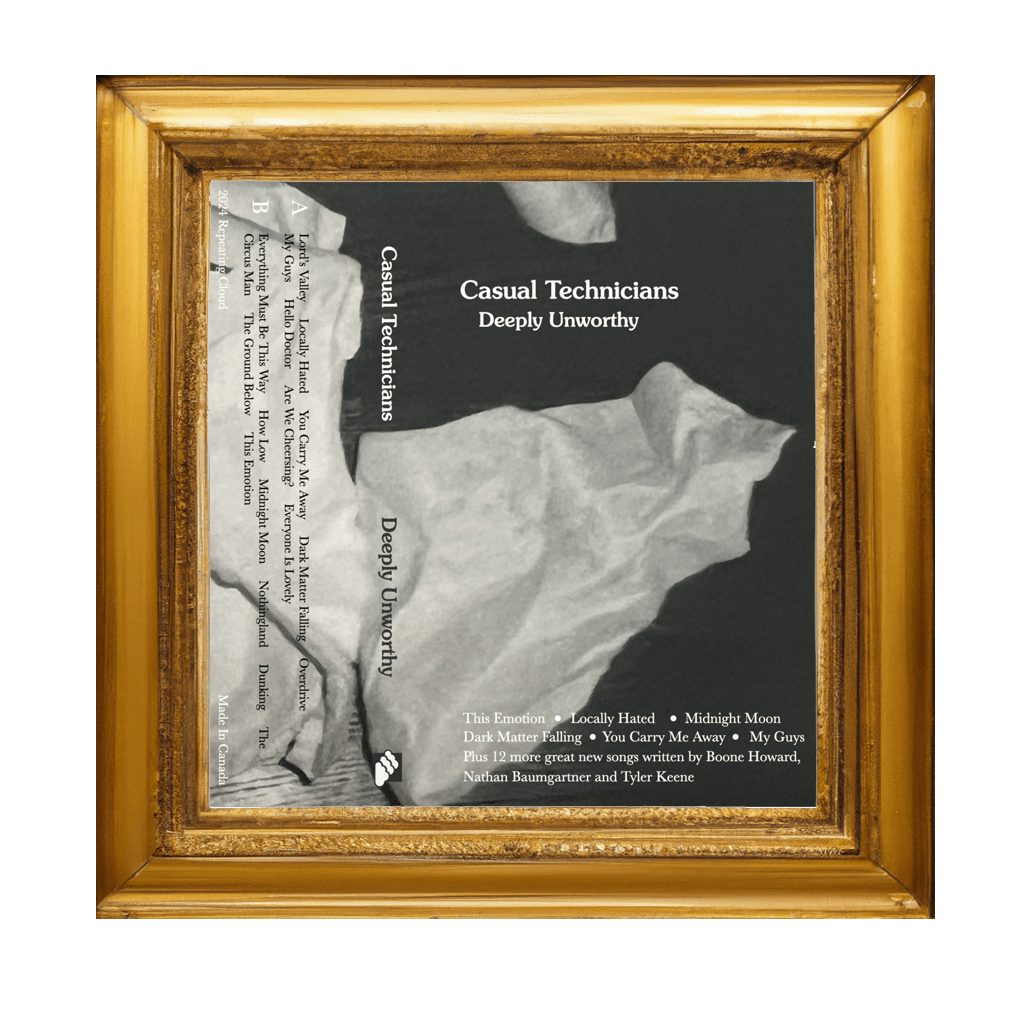
TRACK | Casual Technicians – Dark Matter Falling

5/5 golden merles

America’s heart is effectively vestigial, the body running on delusion alone. But every now and again it beats, startling and amusing us.

Folk rock, alt country, freak folk, anti-folk; whatever dendritic subgenre Casual Technician’s “Dark Matter Falling” roughly fits into beyond Rock, these are things that exist in a state of defiance to the grotesque bulk of another definition. Please remember that the heart is also an outlier in relation to the other organs and would be considered an outcast among them.

We don’t need to retread that in the general appraisal Folk lacks self awareness and Country‘s sick bravado and sweetness makes me want to peacefully disassociate into an eternal coma, god willing, at the expense of my demonic private insurers.

But on the periphery and in the shadowy wasteland of upstate New York there exists at least one aggregated cabal of Portlanders intent on redeeming noise and structuring it in a manner that makes people feel whole and not diminished. If you’re familiar with Townes, Csehak, Von Schleicher, and Van Gaalen (North American, at least), it’s a bit like these things.

A large part of it’s glory is the celebration of real collaboration, unions of narration and melodic intentions merging. The contrasts and collisions are all of similar quality and keep it from congealing.

Otherwise it’s just experiment and invention informed by history but not beholden to it, offered up thoughtfully without conceding an opulent melodic core, conducted with utmost conviction and replete with distinct language. Maybe it seems easy when put like that, but it isn’t.

There are two super strong singles already up. Cassette via Repeating Cloud on 11/15/24. Digital on the bandcamp for $7.

TRACK | Merce Lemon – Backyard Lover

5/5 golden merles

Sometimes the magic trick isn’t a slight of hand. Though often the case, it isn’t always derived from a dexterity of muscle memory achieved through practiced repetition coupled to a misdirection which makes it seem as though something incredible has happened. Sometimes a kind of magic is derived from slowing down. Or reexamining what is plainly visible but has been taken for granted. It is the exception to the rule but also remarkable. This is that second one.

Language is complex, small manipulations of its channels and ruts can have a cumulatively outsized effect.

In “Backyard Lovers” pauses are pulled apart, lines are staggered to warp or embolden them. It is a valuable offer for a free and safe means of disoriented coherency. The perspective shifts. The familiar is made a bit exceptional. It speaks in the language you speak, but it expands that language. It appears in a recognizable indie/folk rock arrangement, but it extends the possible combination of elements through some frankness and some creative problem solving otherwise known as invention.

Another way I find it to be good is that sometimes you can let a melody go and it comes back to you stronger. That takes some strong kind of confidence and it’s easy to lose in the process of making. In writing the song you’ve got to remember it; the more subtle its shifts and elaborations, the harder it is to keep the thread from tangling up and knotting here or there. There are many elements to this particular making that seem sheerly intuitive and others that seem deftly calculated.

For example, late on there’s an assemblage of attributes listed that don’t fit the earlier structure, compiled as an addendum between two instrumental passages. It’s placement is a little unusual, but it is adding significant, palpable depth and nuance to the portrayal of the world as it has been uttered into being. Instead of binding back into the chorus at the end and the edge of the track, the bridge leads out of the world, back to this one or another, whatever you prefer.

This song was found through the tireless and obscene scouting of Various Small Flames and you should go read that blog. Vinyls and Tapes from Darling Records, and preorder the files on the bandcamp; arriving on Sept. 27th.

TRACK | Little Oil – Hey Judas

5/5 golden merles

Coming 2nd among Twelve Songs, Little Oil’s “Hey Judas” is a psych-folk tune composed of deftly piercing hooks dispensing immense compassion. Piano’s plonk and murmuring synths ferry the arbitration neatly forward, familiar myths reconfigure, agreeably heralded in the heat of the room. The melodic components are strong. The envoy offers consolation, there’s very little dread to be found within a context usually larded with it, only sunny reconciliation.

How to even begin to approach this subject and themes in its gilded iron sarcophagus, or deflect the baggage of the bastards who claim its copyright?

The answer is: orthogonally, reinventing suppositions around base symbols we’re all locally steeped in, the reframing of the frame within another. Or just generally with a little innovation and the warmth distinct to those who remain in the world.

There’s plenty of good examples within the approximate genre to pull from and a nice suitable lineage. “Hey Judas” slides into place among other fine tracks such as Loose Fur’s “The Ruling Class,” Brian Jonestown Massacre’s “The Ballad of Jim Jones,” Page France’s full “Hello, Dear Wind,” Doug Marsch’s rendition of “Woke up this morning with my mind (staying on Jesus).

The whole set has a lot of these same sensibilities, cutting melodies, rich images placed aside non-lexical grooves and is worth investigating. Cassettes from Fountain Inc. and digital are $12 on the Bandcamp.

TRACK | Being Dead – Muriel’s Big Day Off

5/5 golden merles

The Being Dead duo put out one of my very favorite albums of last year, Zero Percent APR’s Higher and Higher Forever. They consistently identify and deliver strange causes for celebration in a homogenized period of concentrated wealth and rights restrictions that desperately needs them. The whimsy and wrath is what is warranted, having fun in hell, and holding court on the ineffable indelible shit. Artpop can be good and have a big heart.

A couple of real go getters. Weird but with good cause. Good movements. Melodies as intricate and warbling as the sentiments, complexities that interlock amusingly but always cater first to the feeling of the thing. You, too, could be telling stories in content and form. Probably not this good, but you can do it as evidenced by this thing existing, it’s proof.

There’s plenty taken from convention, the shared language and lineage of pop and anti-folk that makes the work approachable. But every track is also subverted with such care and conviction, ensuring that each effort/song finds a path that leads somewhere new and rewarding. Please just read Szarkowski on the thicket for a brief and compelling summary of this manner of work:

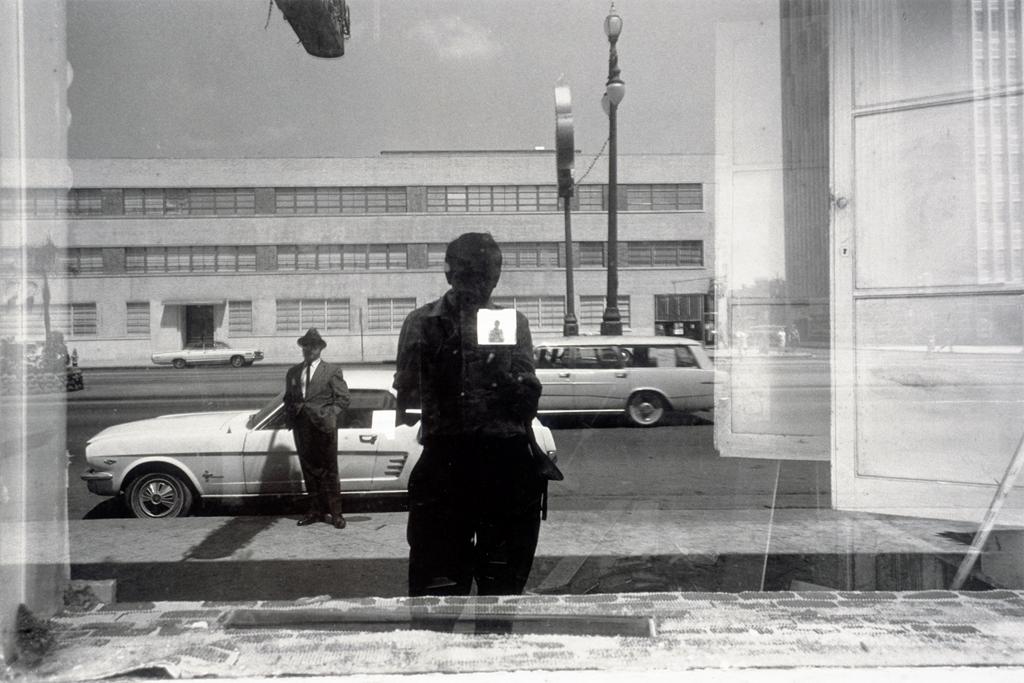
“When Lee Friedlander made the photograph reproduced here he was playing a kind of game. The game is of undetermined social utility and might on the surface seem almost frivolous. The rules of the game are so tentative that they are automatically (though subtly) amended each time the game is successfully played. The chief arbiter of the game is Tradition, which records in a haphazard fashion the results of all previous games, in order to make sure that no play that won before will be allowed to win again. The point of the game is to know, love, and serve sight, and the basic strategic problem is to find a new kind of clarity within the prickly thickets of unordered sensation. When one match is successfully completed, the player can move on to a new prickly thicket.”

Slack is anticipated, and the line is cut before it tangles or tied into a bow. Examples are the emphatic lull in phrasing, setting up the spelling of Muriel with a long pause that adds additional equivocating “like this:” or the ‘TV Time’ bridge that reads like a medley-merger and the verses recounting of an immediate return to the shoe store.

All of this can be coopted and killed. And will be, but for now it isn’t and that is good. Discs, tapes, records, digital, all available here, and releasing the 14th of July.

TRACK | Paul Bergmann – We Suffer, We Live Too Well

5/5 golden merles

No Masters in Paradise is an exquisite set of gothic rock lamentations for “a world which dies in the near distance.” The honey-drenched tones move in their own time, the invocations galvanized in a mercilessly compelling timbre. Their heralding is welcome. It feels like what a form of rock music might resemble in a declining empire coming to terms with degradation, a clearer assessment, which is to say dustier but less diluted, one by which its subjects might become better acquainted with themselves: grandiose and pensive, drifting and caroming over the graveyard.

It’s wholly against my type to select the longest track on an album as the feature. Six minutes is several lifetimes worth of material in which to stagnate and strangle, stumble into a dead end at any given moment. But instead it comes across as one of those rare instances when the town crier is just too damn good. Subsumed in the gently ravaged waves, lyrical alternations around the central chorus and the instrumental accompaniment keep the melody vitalized, always partially submerged, branching out alive in well saturated soil.

Hardly is anything ever this thrilling that moves in such deliberate slow motion, nor do tracks often proffer this balance of lumbering and lively. It’s a different kind of beast, class and character. It seems to be pulling from another source, a discarded set of components from the lineage of rock that is ever-present and instantly familiar but hardly ever chosen to fixate upon. Unrepentantly anthemic without the inane or orthodox excesses, you should probably study its habits.

Probably well received by admirers of Wish You Were Here era Pink Floyd, or, of the more common era, Phosphorescent/Matthew Hauk, the last few Cut Worms efforts, and Peace de Resistance’s recent Boston Dynamics.

It feels to me like there’s a zero percent chance this doesn’t end up on vinyl at some point. But for the god forsaken time being, there are 50 very fine looking cassettes up for $7, and it’s the same for the digital album transaction.

TRACK | Max García Conover – 5 to 4 (ft. paula prieto)

5/5 golden merles

In Max García Conover’s “5 to 4” there is an attempt to reclaim wonder from the pit of kitsch, and dance delicately around that border, lifting. It’s got rare quality and a kind of playful but ruthless cunning that keeps the lines fresh and rewards instead of the normal, standardized route of punishing attention. A novel approach. The EP set is “somewhat inspired by a suitcase full of letters my grandfather wrote to my grandmother in the 1940s,” when she was in a hospital for the consumptive poor and he was a different person.

The EP has a good concept and a better execution, most of the value situated in its coherent perspective and phrasing. The featured track including killer lines like “The endless metal barbed in metal,” and “it came down just like you said it would, five to four against the poor,” landing resoundingly within the rhyming scheme.

And that feels not too distanced from Townes or Woody, far more in line with that school than the modern conception of folk that always seems to diminish in its refinement of style above substance, paralleling our diets and or assorted gods. There is a great rarity with which folk music seems relevant to me, with this calibrated style and substance, feel and fondant. It’s been given such a bad name through regular consumption that it feels such a shock when you do get a dose of the decent.

Found and stolen from the esteemed scouting of Jon Doyle at VariousSmallFlames.co.uk. Everything in Winter EP is $5 on the bandcamp.

TRACK | Jason Hill – They Like Me, They Love Me

5/5 golden merles

Experimental LA pop rock from Jason Hill, “They Like Me, They Love Me” is a dreamy and delicately disoriented tune. Lyrically ponderous, an obsessive narrative yarn is delivered concerning personal presentation and the series stories that ultimately construct the self. The tale is told over some faded percussive gears and accented with a richly detailed accompaniment that allows the 4:45 runtime to feel positively tight. There’s a lot of pretty shimmer coinciding with the dreary divulging, everything broken up in an intriguing elaboration.

The tune has rightly captured the feel of an interrogation, including the competing of illusions and a progressively faltering devotion to a lie. A cello punctuates the middle movements as the rhythm guitar sways across the soundscape, dancing by itself on the periphery. Vocal layers clamber along the octaves, corroborating in the chorus half the time, probably contradicting elsewhere. All of that lumbers harmoniously along, graceful enough to warrant further study.

There’s a great warm wrath to it, derived from fermented fog and bottled in. The track was featured in Netflix’s The Confession Killer and written from the perspective of Henry Lee Lucas, “once suspected to be the biggest serial killer of all time but was really just a serial liar.” It stands up on its own, the wilted and creaking confessional, but you get the feeling there’s further illumination in the coupling of these spectacles. What’s the harm in hearing what they have to say?

TRACK | vivi milne – In 2

5/5 golden merles

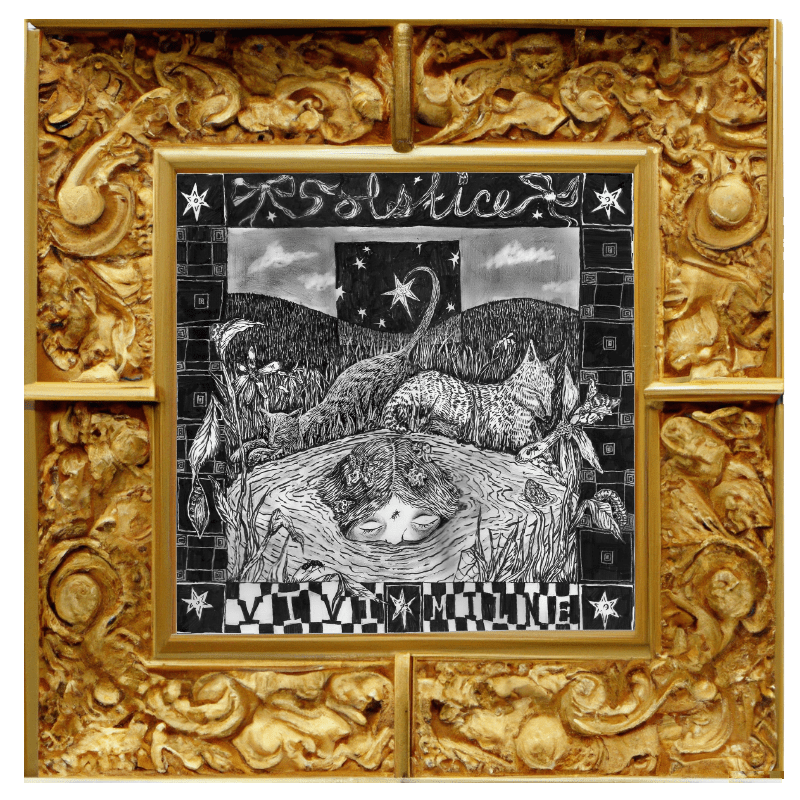
Solstice is bedroom/lo-fi folk that is elaborately cut together, pulling at interpersonal strands and cogently tracing them back into their universal underpinnings. It follows closely on the heels after 2020’s also great Double Headed Deer and is akin to that cloth. “In 2” is a good representation of the style and substance of that storytelling, demarcating the unease in the daring, fractured totality.

The vocal tracks heavy leftward arc feels present in the room, the thoughtful melodies are at all times in a state of serenely careening. It feels like a personal but not indulgent document, a good, individual archive of the era and that is rare and valuable. “There are certain memories that remain inviolate to the ravages of time,” fortunately.

Sometimes songwriters use both style and text and it is a great relief. Maybe you think this is the default, but I tell you it is not. At least not to the extent by which both are refined or cataloged. It’s a lot less poised to perish than anything else you’ve been sold this month, musically or otherwise. $7 on the bandcamp for the set.